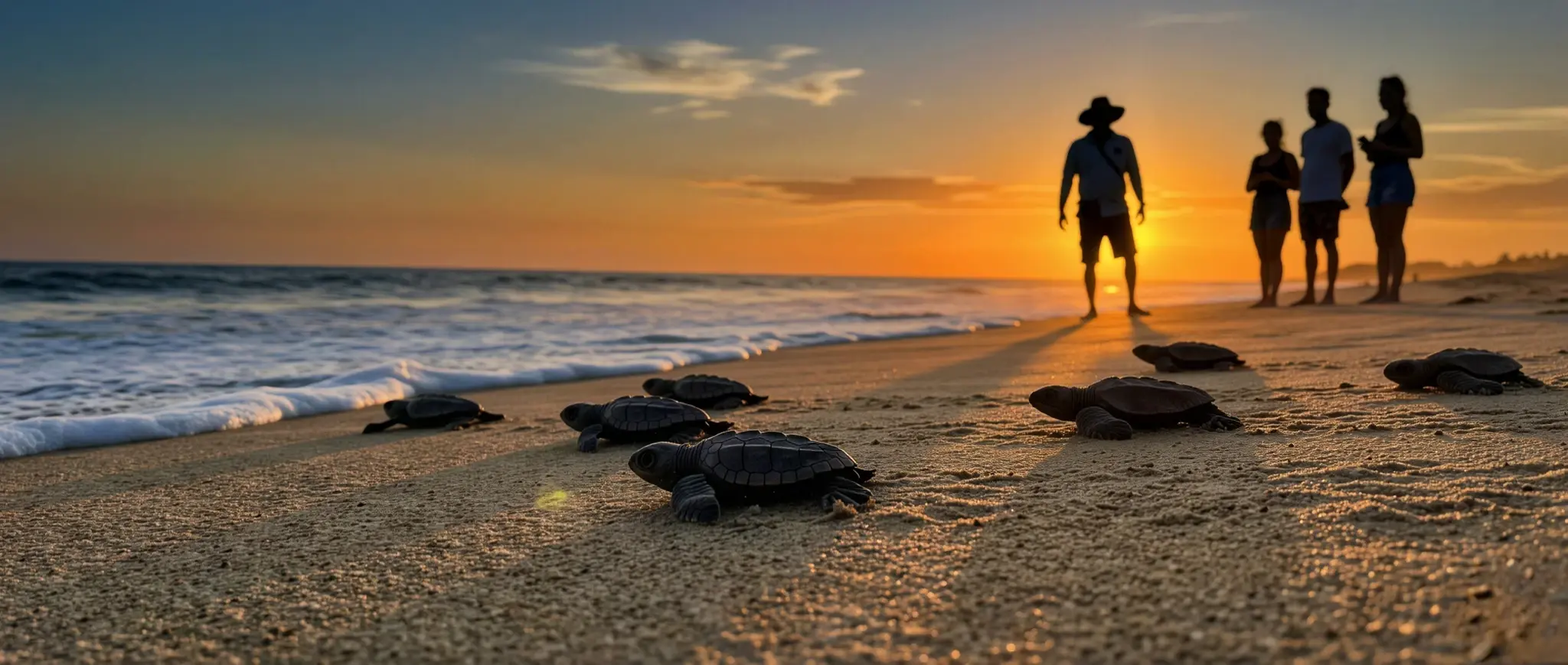
Releasing sea turtles in Puerto Escondido is one of the most moving experiences you can have on the Oaxacan coast. Watching tiny hatchlings crawl toward the ocean in the fading light connects with something deep: the fragility of life, the power of nature, and our responsibility as visitors. But this experience only has value when done responsibly.
Not all release programs operate with the same standards. Some prioritize real conservation; others, unfortunately, exploit tourist enthusiasm without considering animal welfare. This guide will help you tell the difference, prepare properly, and participate in a way that truly contributes to protecting these species.
Why doing it right matters
Sea turtles face constant threats: nest predation, pollution, bycatch, and climate change altering incubation temperatures. Legitimate turtle camps work to protect nests, monitor hatchings, and release hatchlings under conditions that maximize their survival.
When you participate in a poorly managed release—with bright lights, excessive handling, or at inappropriate times—you reduce the hatchlings' survival chances. The impact of bad practices multiplied by thousands of tourists each year can be devastating for populations already at risk.
Checklist for a legitimate experience
Before joining any program, verify these points:
Good to know
A serious program will never pressure you to tip, won't sell you turtle souvenirs, and will answer your questions with real knowledge about the species and the project.
Red flags: when to walk away
Not all operations have the best intentions. These are clear signs you should look elsewhere:
Heads up
If something feels wrong, it probably is. Trust your instincts and look for alternatives. Your participation in a questionable program doesn't help the turtles—it harms them.
Basic rules during the release
No flash or white light
Turtle hatchlings orient toward the ocean by following the natural light on the sea horizon. Artificial light—camera flash, phone flashlight, any white light—completely disorients them. They may walk in circles, exhaust themselves, or head inland instead of toward the sea. If you need light, use dim red light pointed at the ground, never toward the turtles.
Don't touch them (or minimize contact)
Our hands transfer oils, bacteria, and residues from sunscreen or repellent that can affect hatchlings. If the camp allows brief contact under supervision, do so with clean hands, no products, and only for a few seconds. Ideally, observe without interfering.
Keep quiet and keep your distance
Noise and excessive movement can stress hatchlings. Maintain a respectful distance, avoid running or shouting, and let the turtles advance at their own pace toward the water. Don't push or hurry them.
Questions to ask before you go
Before committing to any program, ask these questions:
Do you have official SEMARNAT or CONANP permits?
What time is the release? (should be at sunset or after)
How many people participate per group?
What are the rules about photography and contact?
Is a biologist or trained guide present?
How is the program funded?
What happens if there's no release that night?
A legitimate program will answer clearly and without evasion. If responses are vague or defensive, look elsewhere.
Bacocho Beach and turtle camps in Puerto Escondido
Bacocho Beach is one of the most commonly mentioned spots for turtle releases in Puerto Escondido. Some conservation programs operate in this area, though availability varies by season and natural conditions. Before going, confirm directly with local camps if there's activity scheduled—releases aren't always guaranteed.
Nesting and release season varies by species but generally occurs between July and January on the Oaxacan coast. Schedules depend on each camp and natural conditions each night. If you're planning your trip specifically for this, have a backup plan in case there's no release that night.
Having your own vehicle makes it easier to reach Bacocho Beach and other areas where nests are protected. If you're staying in central Puerto Escondido, a Jeep or ATV gives you the flexibility to get there without relying on public transport or taxis.
Note
Always confirm availability locally before planning your visit. Programs depend on natural nesting and hatching cycles, which can't be predicted exactly. Ask at your accommodation or contact camps directly.
What to bring and how to prepare
KORU's stance: tourism that gives back
At KORU, we believe exploring the Oaxacan coast is a privilege that comes with responsibility. We provide mobility so you can access unique experiences like turtle releases, but we believe how you participate matters as much as the experience itself.
We invite you to be a conscious visitor: research before joining any activity, support legitimate programs with your time and donations, and respect the rules that protect local wildlife. When tourism is done right, everyone wins—including the turtles that will keep returning to these beaches for generations.
Good to know
The best photo isn't the one with flash. It's the one you capture at sunset, without interference, watching the hatchlings find their way to the sea. That moment, well lived, is worth more than any image.